Language is powerful. Words have meaning and in magical and occult communities, words carry history, even greater gravitas, and layers of contextual understanding. Knowing the difference between a ‘coven’ a ‘grove’ and ‘kindred’ isn’t just about semantics, it can help you find belonging, avoid confusion and engage with others in a respectful way. This post is designed to help further explore the Boundaries and Belonging Resources info pack by examining the section ‘Common Key Terms & Definitions’
Can’t we just use our intuition? Isn’t it all about intent anyway, right?
Before we dive into some of the definitions, let’s consider that terms Initiate, Seeker, or Priestess can carry specific meanings in some traditions, and very different ones in others. It helps to know who is who, what and why. Asking someone what a term means in their group is a sign of respect, not ignorance. It matters. This helps avoid assumptions and honours the diversity in occult and magical practice. It shows that you’re open to learning and understanding rather than blundering your way through. So no, you can’t just use your intuition in this case, and you should care so at the very least you don’t make an idiot of yourself.
What should you do if you want to learn more about a particular group or tradition?
- 🗣 Ask, don’t assume – Always check what a group means by a term.
- 📜 Titles are earned – Especially in initiatory traditions, terms like High Priestess or Initiate are not self-assigned. The use of these terms outside of these traditions is becoming more common and yet can be quite offensive. It’s helpful to understand why.
- 👀 Informal vs formal groups – “Study circles” or “groves” may not require long-term commitment, unlike covens or magical orders. Again, it’s always helpful to ask if you’re unsure.
- 🤝 Language reflects values – A group calling themselves a ‘Sisterhood’ or ‘Brotherhood’ may have specific gender or values expectations—ask if it’s inclusive.
Understanding the impact of language
To answer the question I posed above, ‘isn’t it all about intent?’ no, it certainly isn’t (fun fact, that’s probably a larger topic I can explore in another blog post) however having a grounded understanding of common language and terms that you’ll hear in pagan, witchcraft, and occult spaces will give you a good place to start from and stop you from looking foolish.
The use of some of these terms also conveys meaning in levels of commitment and learning on offer. Consider the table below (not all types of magical groups have been included here – note I haven’t included anything about formal magical/ceremonial orders) but it’s a good start.
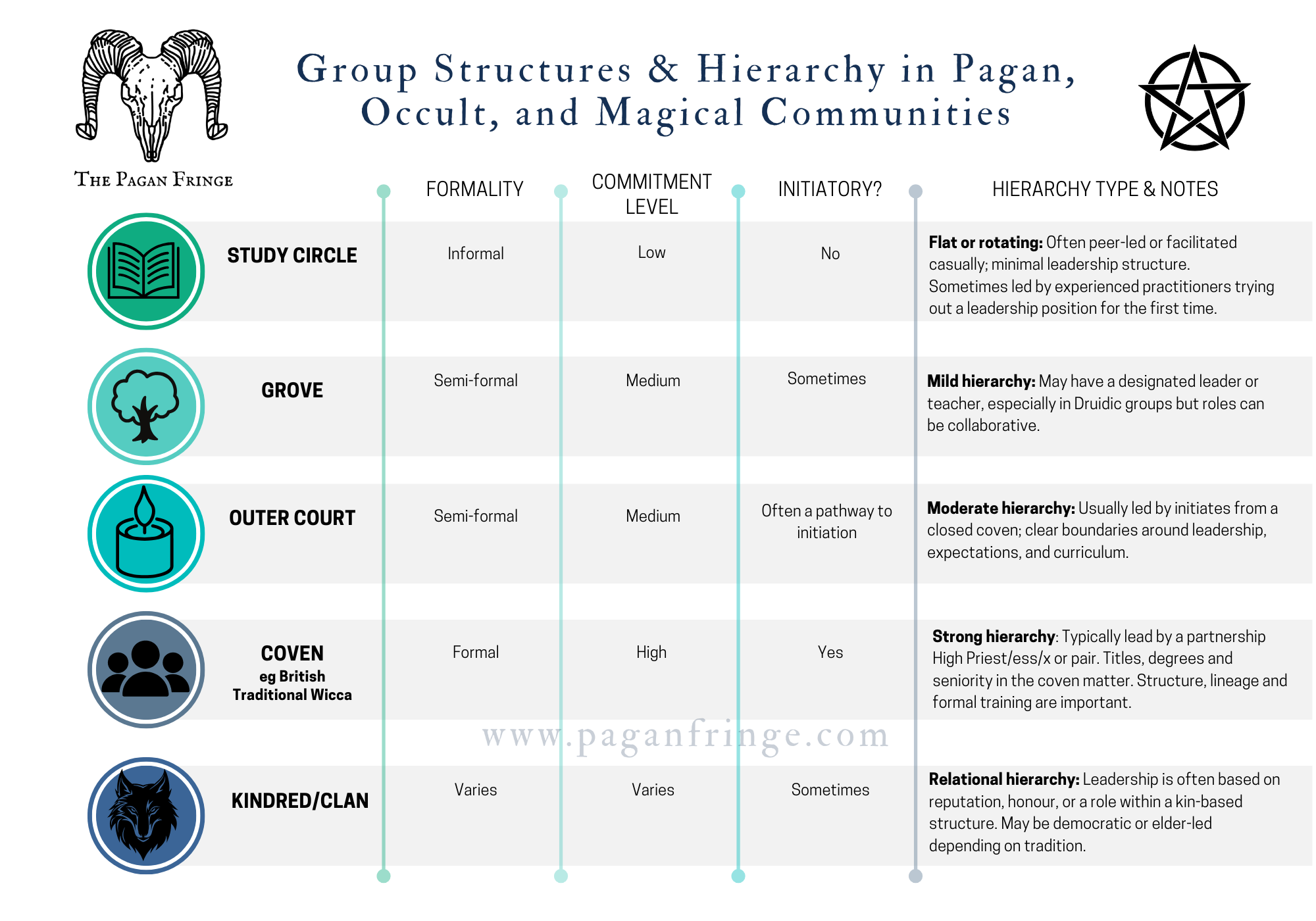
Download a copy of the graphic above here
Notes on Hierarchy Types:
- Flat: No designated leader; decisions made collectively.
- Rotating: Roles may shift from person to person (e.g., different ritual leaders each time).
- Moderate: Clear facilitation or leadership but with room for collaboration and autonomy.
- Strong/Formal: Defined leadership roles, expectations for deference to elders or initiates, potential use of titles or formal training progressions.
- Relational: Less about titles, more about mutual respect, elder roles, or earned status over time.
This list, and indeed this article isn’t exhaustive either. You might find eclectic covens out there with an egalitarian collaborative structure that make all their decision by total group consensus (Starhawk and I believe Reclaiming tradition are also interested in this kind of structure). Different groups and different power structures exist for different reasons. It depends on what you find appealing and what kind of environment you best thrive in.
What have you come across in the wild?
Want to read more in detail? Have a read of the Boundaries and Belonging Resource Pack.
Let me know if you have any questions or comments. Happy to discuss!
Don’t forget to subscribe to our email list to stay up to date on all our events, some which will be invite only in future to manage numbers.
Discover more from The Pagan Fringe
Subscribe to get the latest posts sent to your email.
 The Pagan Fringe