I’ve been sitting on this article for a little while now and I was see-sawing about publishing it here, but I’ve decided to go ahead with it for a few reasons. Let me explain them before I jump into the ‘meat and potatoes’ of the topic itself.
It’s related to an earlier topic that I wrote about here, about engaging with your community should be free and easy and it expands a little on that topic, so it’s a bit of a natural stretch from that direction, however it extends the idea a little further. It gained some decent traction when I initially shared it and the point stands. Engaging with any community should be free/low cost, and easy.
Secondly this simple piece was rejected from another newsletter which I mistakenly took for an editorial publication, (it was more of an advertising glossy circular) and given the nature of this discussion, you’ll see why it’s potentially not the best fit for these views.
And thirdly, since I wrote this about a month ago, I’ve seen a few more commercial enterprises pop-up in the witchy space. I’m noticing this is a bit of ‘scope creep’ from the new-age and life coaching spaces reaching far into witchcraft, occult and pagan communities in an attempt to capitalise and make a profit from the returning popularity of the witchy aesthetic, so that was the third and final sign for me to hit the publish button on this. Anyway – let me know what you think 🙂
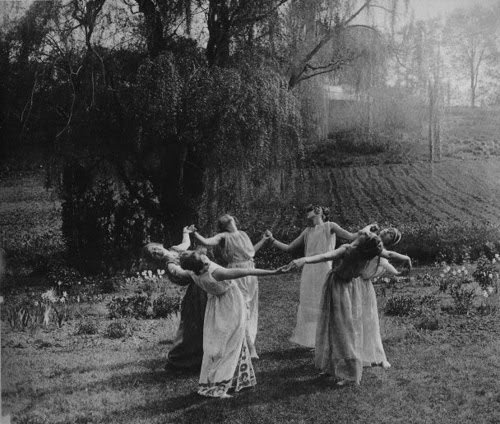
When I first became involved in the pagan community in the 1990s, connecting with like-minded individuals was relatively simple but I was severely limited by my age and lack of resources. As a teen, I couldn’t attend events in licensed venues, and my lack of independent transport further restricted my options. I still found people via the early online world (hello mid 1990’s internet) and luckily found a local pagan group meeting near me in Sydney. I was thrilled to eventually find a sense of belonging and community.
Fast forward to 2025, and while finding people and events online is undoubtedly easier than ever, the landscape has changed quite profoundly. The question isn’t just about finding folks and access anymore, it’s more about what we’re accessing, and the nature of the community we seek. What exactly are we seeking, why, and what do we find when we go searching?
In today’s world, I am observing a growing divide between community and commodity in the pagan sphere. What once gained popularity as a post-war countercultural religious or spiritual expression has increasingly become a market-driven opportunity, with focus often placed on transactions rather than connections. When everyone who has an interest or hobby is encouraged to turn it into a money-making side hustle, and everywhere you look, everyone is a self-styled spiritual and wellness influencer, I think it’s prudent to be mindful of what you’re searching for and why.
Relationships are nurtured, not purchased…
In my opinion, the commercialisation of our spiritual practices threatens the integrity of the wider witchcraft and pagan communities that many of us are seeking. This isn’t a critique of folks who charge for a product or service (go for it), but more so a commentary on people who think like a Liberal Govt and think that community building can be privatised and monetised for personal gain. Community building cannot and should not be commodified, it should remain a space where relationships are nurtured, not purchased. Our interaction with the divine is sacred, not something that can, or should be mediated by money.
So what are seekers looking for?
- Information: Many seek Southern Hemisphere-specific guidance after reading Northern Hemisphere texts. How do we adapt practices to our local seasons and environment? This information is increasingly available online and in community zines, often freely accessible to those who search. (Like the one this was initially supposed to be published in)
- Supplies/Shopping: The commercial side of paganism often first manifests in the quest for ritual tools and supplies. New practitioners frequently believe they need specific items to practice effectively. Here’s a secret, you don’t need ‘stuff and things’ to practise a witch craft. Authentic spirituality requires little material investment—natural items, repurposed household objects, and good old motivation and intent can matter more than expensive purchases. Spend more time on your studies than money.
- Teaching/Mentorship: This is where boundaries can sometimes blur most dramatically between community and commerce. While knowledge-sharing is fundamental to many of our traditions, the monetisation of teaching has created a marketplace of workshops, courses and experiences. Again, true mentorship builds relationships rather than customer bases, creating space for mutual growth and exchange. Tread carefully and ask yourself, what exactly are you being asked to pay for? Is it a reasonable exchange of value? Does it sit within your developing value framework? (yes, I acknowledge that there are plenty of exceptions to this where it’s culturally expected that you pay for your training….do your research)
- Coven/Group Experiences: The desire for belonging drives many to seek group experiences in person. When events carry costs, transparency in my opinion becomes absolutely essential. Are fees covering venue hire and materials, or generating profit for one person and their business? Community-minded groups can offer sliding scales, work-exchange options, or free events alongside paid offerings. Many covens will never ask for money in exchange for training and membership. Do your research and ask around.
Building a Sustainable and Inclusive Community
The witchcraft, pagan, and occult communities thrive on diversity, not just in beliefs but in access and involvement. As we build inclusive spaces, we can focus on relationships rather than transactional interactions. How can we do this?
- Offering free or low-cost events when possible (like we do!)
- Creating volunteering opportunities and community sponsorship systems.
- Being as inclusive as possible by hiring and working with accessible venues.
- Implementing transparent and thoughtful pricing when costs are unavoidable.
- Resist the urge to fall into consumerist behaviours simply for the sake of it. The planet has enough waste to contend with. Don’t buy into creating more of it.
If we move away from commodifying our practices and focus on nurturing real connections, the pagan, witchcraft and occult communities can continue to thrive for generations to come. What are your thoughts? How can we ensure that community and connection remains at the heart of what we do?
Since writing this, I’ve hosted and run a community ritual (Samhain, in late April 2025) for the wider Western Sydney witchcraft, occult and pagan communities, which was free. On the night, we accepted donations/contributions which folks generously offered. In the spirit of transparency, I’m happy to disclose that we took $75 which will go towards covering the expenses incurred ($414). No profit was made on the evening. My co-host and I were/continue to be happy to cover any residual costs ourselves as a community offering.
What primarily concerns me now is the resurgence of purely profit driven activity which brings me to the key points in this article. Ask yourself, who stands to benefit from where you spend your time, attention, and mostly importantly, your money? And what is the likely outcome?
Discover more from The Pagan Fringe
Subscribe to get the latest posts sent to your email.
 The Pagan Fringe
Thankyou for your generous service. Personally I dont think you should have to wear such a large portion of costs for hosting events so perhaps in future have a suggested donation so folks understand what it costs. Blessed Be 🙂
LikeLike
This was something we chose to do consciously – and given it was so well received this time, I think asking for assistance to help cover costs could work next time too.
But as a stand alone act of service, we are also extremely comfortable with the outcome ☺️
LikeLike